AI Visibility Audit

See how your business shows up when buyers ask AI who to trust.

Your customers are already using Google, AI results, and ChatGPT-style assistants to research, compare, and choose. An AI Visibility Audit shows where your business appears, where competitors are being recommended, what AI systems say about you, and which gaps should be fixed first.

Built for local, hybrid, national, and SaaS brands that need to understand their visibility across search and AI-powered discovery.

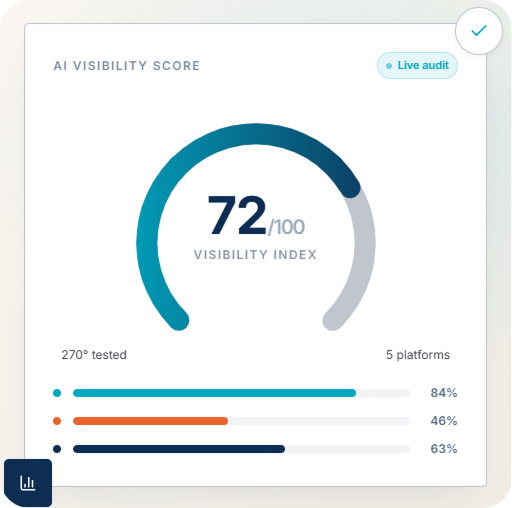
Illustration representing AI visibility testing across Google, Maps, and assistant surfaces.

Request your free AI Visibility Audit.

Complete the form below so we can review the right business, market, competitors, and visibility surfaces.

The audit is designed to show where your business is visible, where it is absent, where competitors may be showing up instead, and whether AI systems are describing your business accurately.

Tell us what to audit.

Share your website, market, and main competitors so we can review the right visibility gaps.

Which visibility areas are you most concerned about?

No obligation. We will review your request and follow up with next steps.

AI may already be shaping your buyer’s shortlist.

A buyer does not need to visit your website to form an opinion anymore.

They can ask ChatGPT which company to trust. They can read a Google AI result before clicking anything. They can ask Perplexity for options. They can compare providers through AI-generated summaries, review snippets, third-party sources, and local search results.

That means your business may be evaluated before you ever see a website visit, a form fill, or a phone call.

  • Are we showing up in AI-generated answers?
  • Is AI describing our business accurately?
  • Are we visible in Google and AI for the same buyer journey?
  • Are competitors being recommended instead?
  • Which sources are influencing the answer?
  • What should we fix first?
If AI is helping buyers decide, you need to know what it is saying before your competitors do.

This is not a keyword report. It is a visibility baseline.

The audit looks across the search surfaces and AI-assisted decision points that influence how buyers discover, compare, and choose.

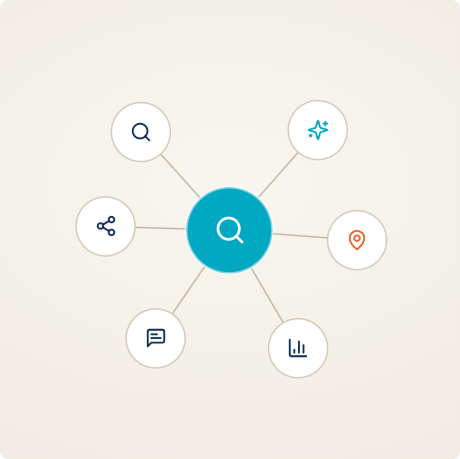
Hub diagram connecting Google search, AI assistants, local maps, citations, entity accuracy, and competitor signals around a central audit lens.

Google Visibility

We review how your business appears in traditional Google search for priority topics, service terms, local-intent queries, and decision-stage searches.

What we look for: Rankings, page relevance, search snippets, content gaps, and whether the right pages are positioned for the right intent.
Google AI Overviews and AI Mode

We review how your business is represented in AI-generated Google experiences where applicable, including whether your brand, pages, or competitors appear in summarized answers.

What we look for: Inclusion, citations, answer quality, competitor presence, and missed content opportunities.

AI Assistants

We test realistic prompts buyers may ask inside ChatGPT, Gemini, Perplexity, Copilot, and Claude when researching your category, comparing options, or deciding who to contact.

What we look for: Brand mentions, competitor recommendations, accuracy, cited sources, and whether the answer supports or weakens your positioning.

Local / Maps Visibility

For location-based businesses, we review local visibility signals such as Google Business Profile quality, reviews, local pages, location consistency, and Maps Pack presence.

What we look for: GBP completeness, review signals, location authority, local citations, calls-to-action, and local buyer intent coverage.

Citation source mix

AI systems often rely on third-party sources to summarize businesses. We identify which sources appear to influence answers and whether those sources are strong, current, and accurate.

What we look for: Directories, review platforms, third-party mentions, comparison pages, industry sources, outdated listings, and inconsistent facts.

Entity accuracy

The core AI Entity Accuracy Audit — a 7-category battery checking whether AI systems make incorrect, incomplete, or outdated statements about your business. Scored by severity (low, medium, high, critical), each with a fix path.

What we look for: Wrong services, outdated locations, incorrect pricing assumptions, missing capabilities, weak descriptions, and competitor-biased summaries.

Competitor Recommendations

We compare how your business appears against competitors for the prompts and searches buyers are likely to use.

What we look for: Who is being recommended, why they appear, what sources support them, and what content or authority gaps you need to close.

A practical action plan, not a generic SEO checklist.

The audit is designed to give you a clear baseline and a prioritized path forward.

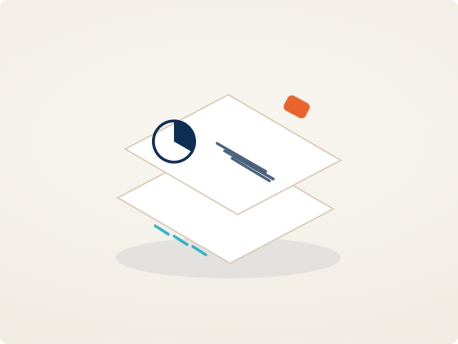
Illustration of audit deliverables including scorecards, prompt maps, and prioritized action documents.
Get your free audit

AI Visibility Scorecard

Where you appear across tested prompts and platforms, scored 1–5 (your AI Visibility Score).

Your prompt universe

The realistic buyer questions, Google searches, comparison prompts, and AI-style queries used during the audit.

Competitor Visibility Snapshot

A view of which competitors are being surfaced, recommended, cited, or described more favorably than your business.

Source and Citation Map

The citation source mix — pages, profiles, directories, review sites, and third-party sources that appear to support or weaken your visibility.

AI Entity Accuracy findings

Each incorrect, outdated, incomplete, or risky AI-generated statement about your business, rated by severity with a recommended fix path.

Priority Fix List

A ranked list of what to improve first: website content, FAQs, source-of-truth pages, local profiles, citations, schema, reviews, third-party mentions, or conversion paths.

Recommended Next Steps

A clear explanation of what should happen next, whether that means fixing foundational issues, creating new content, improving local visibility, strengthening citations, or building a broader Search Systems Engineering program.

The audit is built around real buyer behavior.

Instead of only asking whether you rank for a keyword, we test the kinds of questions buyers ask when they are trying to make a decision.

Local Intent

  • “Who is the best [service] company near me?”
  • “Which [business type] has the best reviews in [city]?”
  • “What company should I call for [problem] in [market]?”

Comparison Intent

  • “What are the best companies for [service]?”
  • “How does [your company] compare to [competitor]?”
  • “What should I look for when choosing a [provider type]?”

Category Intent

  • “Who provides [specific solution] for [industry]?”
  • “What companies specialize in [use case]?”
  • “Which provider is best for [buyer situation]?”

Trust & Risk Intent

  • “Is [company] reputable?”
  • “What are common issues when choosing a [provider]?”
  • “Which company is best for a business that needs [specific requirement]?”

Best fit for businesses where search visibility affects revenue.

This audit is useful if buyers compare options before contacting you, if competitors are active in search, or if your business depends on being found accurately across Google and AI-assisted discovery.

Local Businesses

Businesses that depend on Google Maps, reviews, phone calls, direction requests, service pages, and local intent searches.

Multi-Location Brands

Companies with multiple offices, branches, service areas, clinics, stores, or locations that need consistent visibility across markets.

Hybrid Businesses

Companies that need both local visibility and broader category authority.

National Brands

Businesses competing for category, comparison, and recommendation visibility across a wider market.

SaaS and B2B Companies

Companies that need to appear in use-case searches, comparison queries, alternative searches, and AI-generated recommendations.

A clear process. No mystery report.

Intake

We collect the basic information needed to run the audit: your website, locations, priority services, competitors, target markets, and business goals.

Prompt and Search Mapping

We build the initial query and prompt set based on how buyers search, compare, and ask AI for recommendations.

Visibility Testing

We test visibility across selected search and AI surfaces, document results, review cited sources, and identify competitor patterns.

Source and Accuracy Review

We review whether the information AI systems use about your business is accurate, complete, consistent, and supported by credible sources.

Findings Review

You receive the visibility baseline, key findings, and a prioritized action plan. You get a clear baseline now — turning it into movement takes time: local actions in 30–60 days, AI visibility over 6–12 months. The action plan is sequenced accordingly.

A serious audit should set clear expectations.

AI tools are probabilistic. Results change based on the prompt, the model, retrieval behavior, and which sources engines trust on a given day. The audit is designed to identify the signals that influence visibility — not to claim control over systems no one can fully control.

What we can do

  • Identify visibility gaps
  • Find competitor advantages
  • Document AI inaccuracies
  • Map cited sources
  • Recommend content and citation improvements
  • Prioritize technical, local, content, and entity fixes
  • Build a measurable improvement plan

What no one can honestly guarantee

  • Guaranteed AI rankings
  • Guaranteed ChatGPT recommendations
  • Guaranteed citation in every AI answer
  • Permanent visibility across changing platforms
The audit is not about false certainty. It is about knowing where you stand and what to improve next.

AI Visibility & Entity Accuracy Audit FAQs

Short, direct answers about what the audit covers, who it’s for, and what happens next.

What is the AI Visibility & Entity Accuracy Audit?

It evaluates how your business appears across AI assistants, Google AI Overviews and AI Mode, traditional search, local search, competitor recommendations, and cited sources. At its core is the AI Entity Accuracy Audit — a structured check of what AI assistants get right and wrong about your business, scored by severity.

Which AI platforms are included?

Coverage depends on scope. We typically test ChatGPT, Gemini, Perplexity, and Google AI Overviews, and expand to Copilot, Claude, Apple Intelligence, and Google AI Mode for broader engagements.

Is this different from an SEO audit?

Yes. A traditional SEO audit focuses on technical health, rankings, content, and organic search performance. This audit also reviews AI-generated answers, brand mentions, competitor recommendations, citation sources, and entity accuracy across answer engines. It complements SEO — strong SEO foundations often support AI visibility because AI systems rely on structured websites, search indexes, local profiles, reviews, and authoritative third-party sources.

Can you guarantee that ChatGPT or Google AI will recommend my business?

No. AI recommendations cannot be guaranteed. The audit identifies the factors that influence visibility and gives you a practical plan to improve your likelihood of being discovered, cited, trusted, and accurately represented.

What businesses benefit most from this audit?

The audit is useful for local businesses, multi-location brands, franchises, professional services firms, healthcare groups, SaaS companies, B2B companies, and national brands that depend on being found and compared online.

How long does the audit take?

The baseline is fast. Improving the results it surfaces takes longer — Google Business Profile actions in 30–60 days, AI visibility over 6–12 months.

What happens after the audit?

You receive a prioritized action plan. Depending on the findings, next steps may include technical SEO fixes, source-of-truth content, FAQ development, schema updates, citation cleanup, local profile improvements, third-party authority building, or ongoing AI visibility testing.

AI Visibility Audit

Find out where your business is visible, absent, or misrepresented.

Request an AI Visibility Audit and get a clear baseline across Google, AI results, ChatGPT-style assistants, competitors, citations, and source accuracy.

You will see what AI systems say about your business, which competitors appear, and which visibility gaps should be fixed first.