Source-of-Truth Pages

Give AI systems one clear place to understand your business.

A source-of-truth page organizes the facts AI assistants, search engines, and buyers need to understand what your business does, where you operate, who you serve, and why you should be trusted.

It is one of the simplest ways to improve AI accuracy, citation readiness, and brand consistency across search surfaces.

Built for local, hybrid, national, and SaaS brands that need to understand their visibility across search and AI-powered discovery.

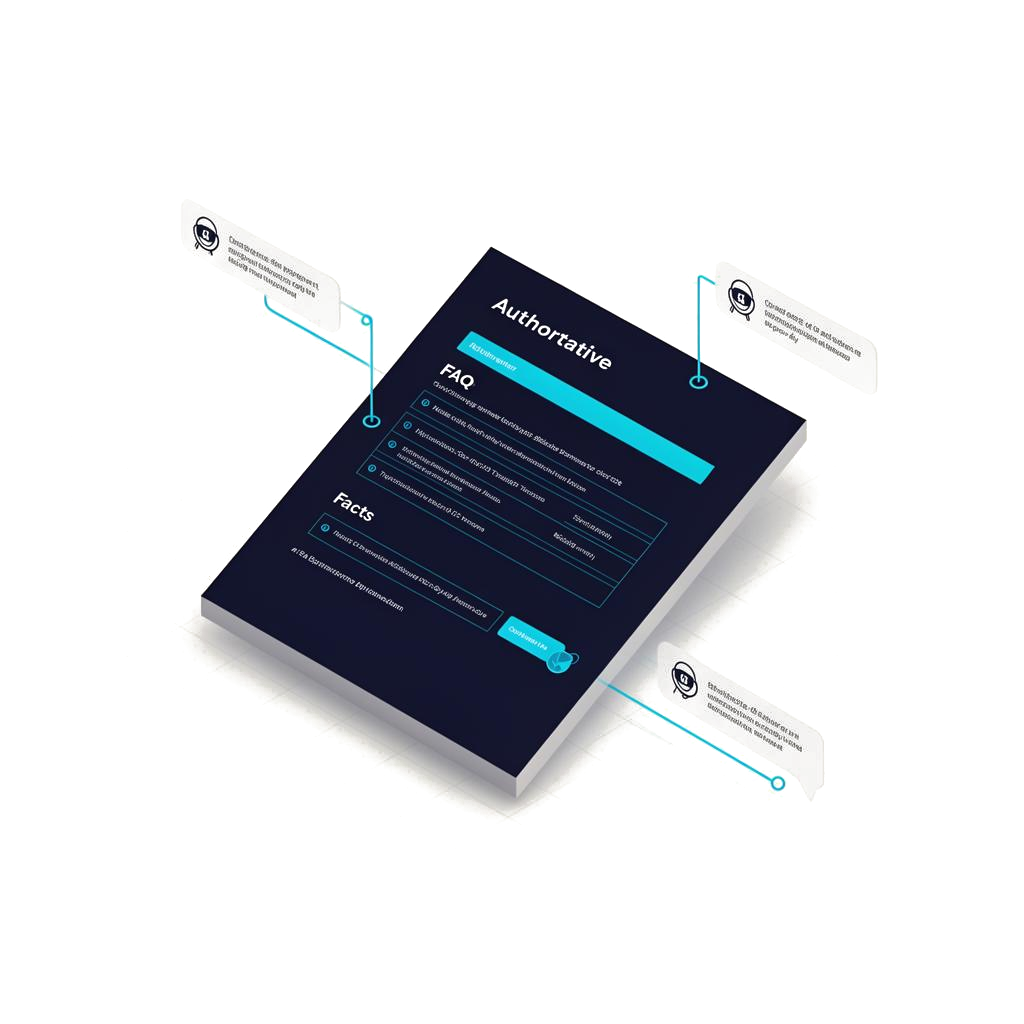
Isometric source-of-truth document with authoritative facts, FAQ sections, and citation callouts for AI systems.
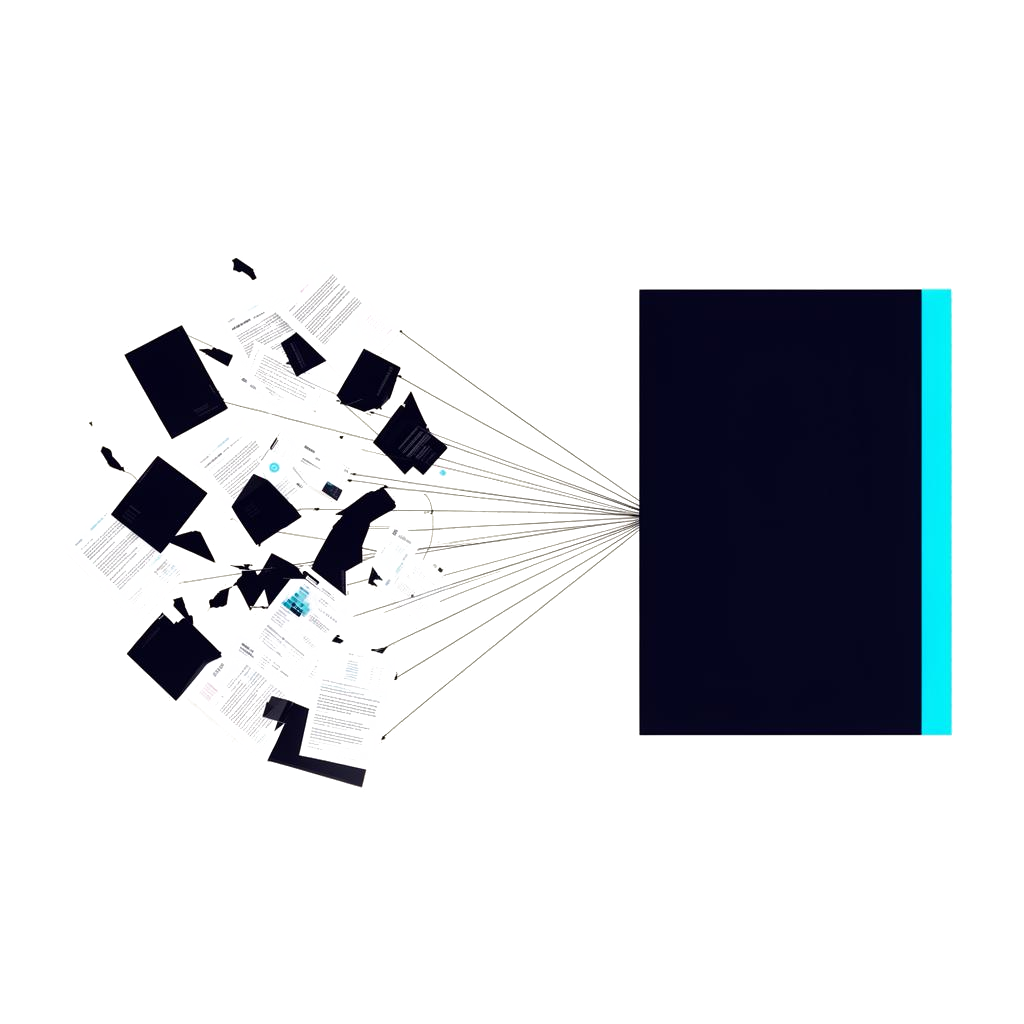
Scattered documents converging into one organized source-of-truth page with structured facts.

AI cannot represent your business accurately if the facts are scattered.

Most businesses have important information spread across many places: service pages, old blog posts, PDFs, directories, Google Business Profile, review sites, sales decks, location pages, and third-party profiles.

Some of that information is current. Some is outdated. Some is incomplete. Some conflicts with other sources.

That creates a problem for AI search.

When AI systems summarize your business, they need reliable source material. If your facts are fragmented, vague, or inconsistent, the answer may be incomplete or wrong.

If you want AI systems to describe your business accurately, give them a page built for accuracy.

A structured reference page for your most important business facts.

A source-of-truth page is a structured, crawlable page that clearly documents a business’s core facts, services, locations, capabilities, credentials, FAQs, and proof points so search engines and AI assistants can understand and cite the business accurately.

  • It is not a generic About page.
  • It is not a hidden knowledge base article.
  • It is not a marketing brochure.

It is a deliberately structured reference asset designed for both human trust and machine readability.
The page should make important facts easy to find, verify, and cite.

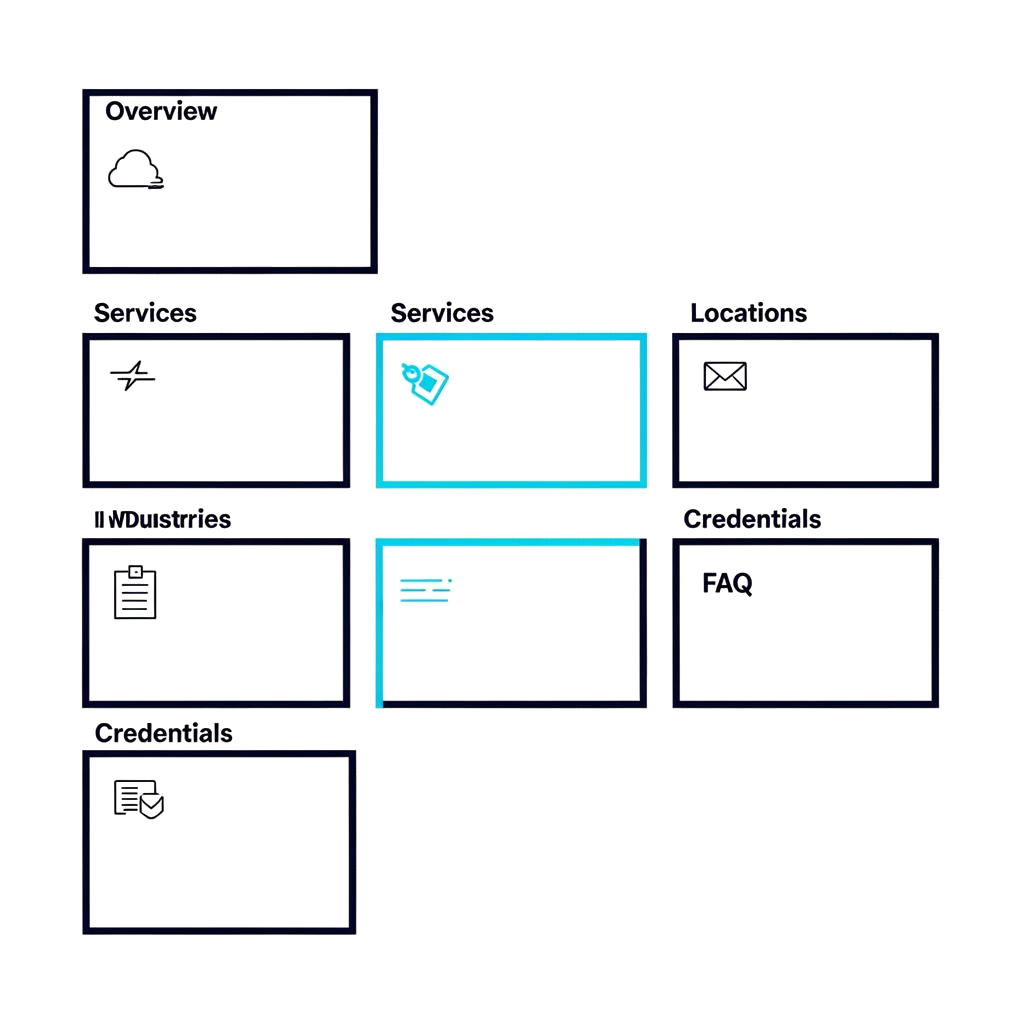
Wireframe schematic showing overview, services, locations, industries, credentials, and FAQ blocks on a source-of-truth page.

Business Overview

A clear, direct description of the business in plain language—what it does, who it serves, and what category it belongs to.

Services or Capabilities

A structured list of services, products, or solutions with concise explanations specific enough for AI to understand.

Locations & Service Areas

Physical locations, service areas, branch coverage, and market-specific details for local or multi-location businesses.

Industries Served

Industries, customer types, or use cases the business supports—critical for B2B, SaaS, and professional services.

Credentials & Trust Signals

Certifications, licenses, experience, associations, awards, review themes, case studies, and other proof points.

Frequently Asked Questions

A visible FAQ section in direct, answer-first language that helps both buyers and AI systems understand details quickly.

Important Clarifications

Facts AI systems commonly get wrong: pricing model, service limitations, geographic coverage, or what the business does not do.

Schema Markup

Structured data that reinforces the page’s meaning for search engines and AI-powered search systems.

Most pages are written to persuade. Source-of-truth pages are written to clarify.

Traditional website pages focus on conversion. Those are important. But AI systems also need clear, structured facts. A source-of-truth page is designed to reduce ambiguity.

Standard website page
Source-of-truth page
Written primarily to persuade buyers
Written to clarify facts for buyers and AI systems
May use broad marketing language
Uses direct, specific, structured statements
Often focused on one service or campaign
Connects core business facts in one reference asset
May omit operational details
Includes services, locations, industries, credentials, FAQs, and clarifications
Conversion-focused
Accuracy, extraction, and citation-focused
Useful for visitors
Useful for visitors, search engines, and AI assistants

A standard page helps sell the business. A source-of-truth page helps define it.

AI systems need reliable sources to generate reliable answers.

Source-of-truth pages support AI visibility in three ways.

Accuracy

Reduces the chance that AI systems rely on outdated, scattered, or conflicting information.

Citation Readiness

Creates a clear page that can be referenced when AI systems need a concise, authoritative summary of the business.

Reputation Defense

Gives the business a controlled asset to point to when correcting misinformation or reinforcing important facts.

A source-of-truth page does not guarantee AI citations. It improves the quality of the facts AI systems can find.

Some businesses need this more urgently than others.

A source-of-truth page is especially useful when the business is complex, multi-location, frequently changing, or often compared against competitors.

You have multiple locations

AI systems need clean location, service area, and branch information to avoid mixing up markets or sending buyers to the wrong place.

You offer multiple services

A single structured reference helps clarify which services are offered, how they relate, and which customers they suit.

Your category is confusing

If buyers often misunderstand what you do, AI systems may misunderstand it too.

You are compared against competitors

Comparison and recommendation queries need strong facts, proof points, and differentiation.

AI is getting details wrong

If AI-generated answers show outdated or inaccurate information, a source-of-truth page becomes a correction asset.

Your team repeats the same clarifications

If sales or support frequently corrects the same misunderstandings, those clarifications should be structured publicly.

Built for clarity, extraction, and accuracy.

We structure source-of-truth pages around the facts buyers and AI systems need most.

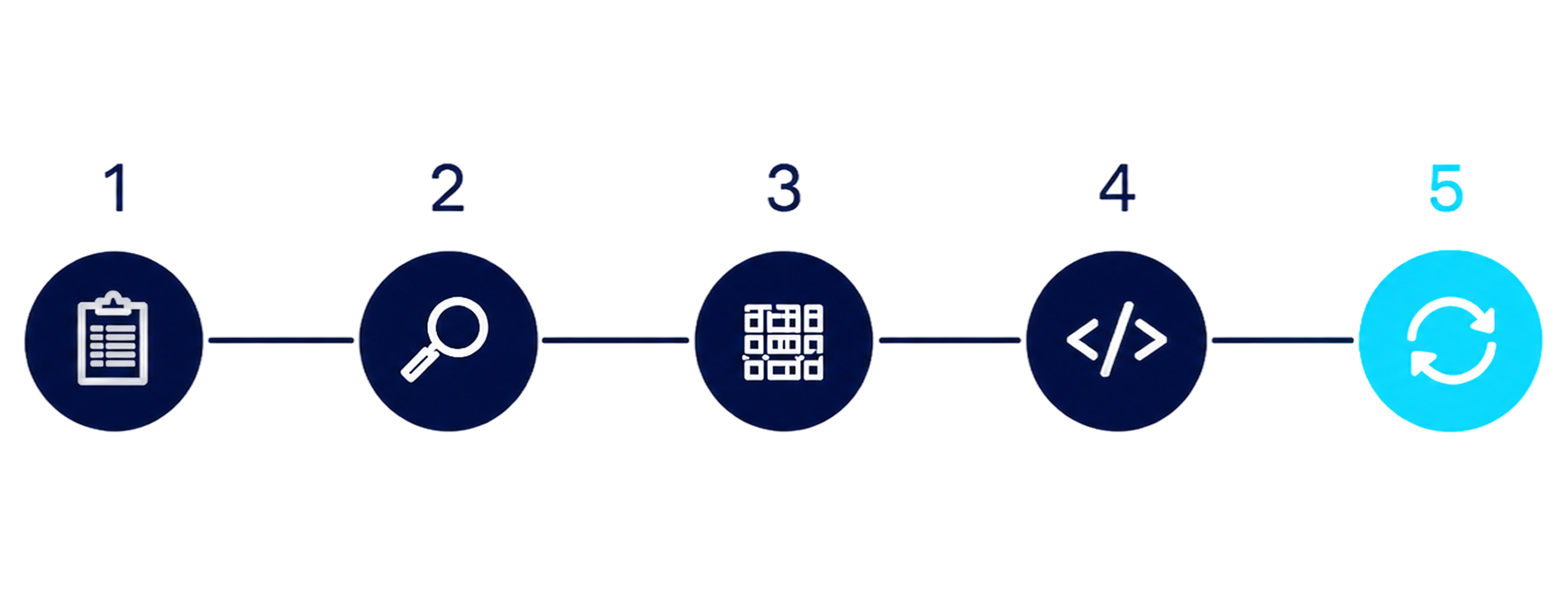
Six-step framework flow from fact inventory through accuracy review, page architecture, schema planning, publication, and maintenance.

Fact Inventory

Collect the core facts: services, locations, industries, credentials, differentiators, FAQs, misconceptions, and proof points.

Accuracy Review

Identify outdated, conflicting, vague, or missing information across the website, business profiles, directories, and third-party sources.

Page Architecture

Organize the page into clear sections with direct headings, concise explanations, answer-first FAQs, and schema-ready content blocks.

Schema Planning

Recommend the appropriate structured data: Organization, LocalBusiness, Service, FAQPage, AboutPage, WebPage, or BreadcrumbList.

Publication & Linking

Connect the page to relevant website sections so search engines, AI systems, and users can discover it naturally.

Maintenance Plan

Define how often the page should be reviewed and what changes should trigger updates.

A page built to clarify your business across search and AI.

Source-of-Truth Content Brief

A structured outline of the business facts, sections, FAQs, and clarifications the page should include.

Page Copy

Clean, direct, AEO-ready copy written for human readability and AI extraction.

FAQ Section

A visible FAQ block that answers common buyer and AI-style questions in concise language.

Schema Recommendations

A list of recommended schema types and implementation notes for the page.

Internal Linking Plan

Recommendations for where the page should link from and where it should link to.

Maintenance Guidance

Instructions for keeping the page current as services, locations, and proof points change.

A source-of-truth page should be useful, not bloated.

A strong source-of-truth page is curated, structured, and easy to understand—not a place to dump every fact about the company.

Avoid

  • Overly promotional language
  • Unverified claims
  • Hidden or uncrawlable content
  • Long paragraphs without structure
  • Vague service descriptions
  • Conflicting information
  • FAQs that do not answer directly
  • Schema that does not match visible content

Better approach

Use clear headings, direct definitions, short explanations, visible FAQs, proof points, and structured data that matches what users can see on the page.

The goal is not more content. The goal is cleaner facts.

Source-of-Truth Page FAQs

What is a source-of-truth page?

A source-of-truth page is a structured, crawlable page that documents a business’s core facts, services, locations, capabilities, credentials, FAQs, and clarifications so search engines and AI assistants can understand the business accurately.

Is this the same as an About page?

No. An About page usually tells the company story. A source-of-truth page is designed to clarify important business facts in a structured format that supports search visibility, AI accuracy, and citation readiness.

Does a source-of-truth page guarantee AI citations?

No. No page can guarantee AI citations. A source-of-truth page improves the quality, clarity, and structure of the information AI systems can use when summarizing your business.

What should a source-of-truth page include?

It should include a business overview, services, locations or service areas, industries served, credentials, proof points, FAQs, important clarifications, internal links, and appropriate schema markup.

Who needs a source-of-truth page?

Source-of-truth pages are especially useful for multi-location businesses, professional services firms, SaaS companies, healthcare providers, franchises, B2B companies, and businesses with complex or frequently misunderstood offerings.

How does this help with AI reputation defense?

When AI systems produce inaccurate or incomplete answers, a source-of-truth page gives the business a controlled, structured asset that reinforces the correct facts.

Should the page be visible to users?

Yes. The page should be visible, crawlable, and useful to real visitors. Hidden pages or schema-only content are weaker and can create trust issues.

How often should a source-of-truth page be updated?

It should be reviewed whenever services, locations, pricing models, credentials, leadership, service areas, or major business facts change. For many businesses, quarterly review is a practical starting point.

Build the foundation

Build the page AI systems can rely on.

AI systems need clear facts to produce clear answers. A source-of-truth page gives your business a stronger foundation for visibility, accuracy, and citation readiness.

We will identify the facts that matter, the gaps that create confusion, and the structure needed to make your business easier to understand and cite.

Clarify what your business does, where it operates, who it serves, and what AI systems should understand about it.