Category pages are too generic
The website may describe the product or service, but not define the category clearly enough for buyers, search engines, or AI systems.
National / SaaS Search Systems Engineering helps your brand show up clearly across Google, AI results, AI assistants like ChatGPT, Gemini, and Perplexity, review platforms, comparison searches, and category-level recommendations — so you can measure your Share of Model, the percentage of AI answers that recommend you, every month.
Built for SaaS companies, B2B platforms, e-commerce brands, online services, national firms, and category-driven businesses.
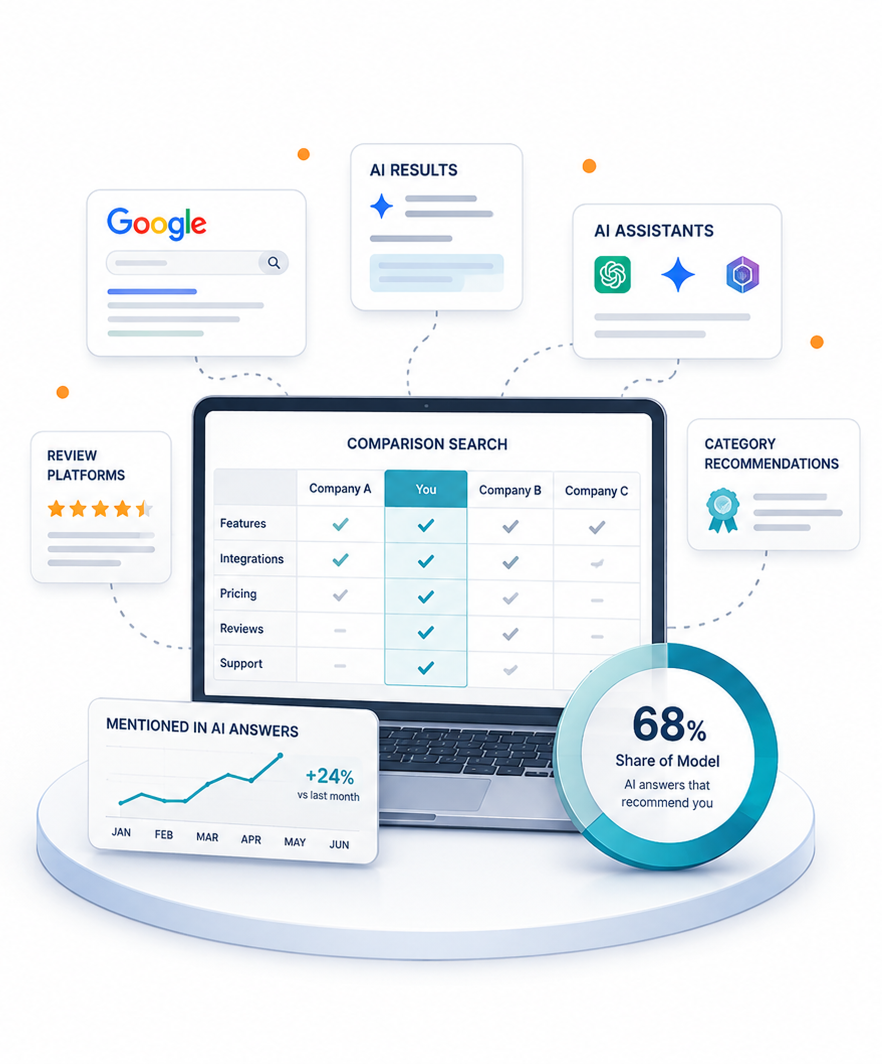
By the time a buyer reaches your website, they may already have a shortlist. That creates a visibility problem for SaaS and national brands.
If your product pages are clear but comparison content is weak, competitors win the decision stage. If your website ranks but AI does not mention you, you may be invisible in a growing part of the research journey.
The website may describe the product or service, but not define the category clearly enough for buyers, search engines, or AI systems.
Buyers search by situation, role, industry, workflow, pain point, or integration need. If those pages do not exist, competitors shape the conversation.
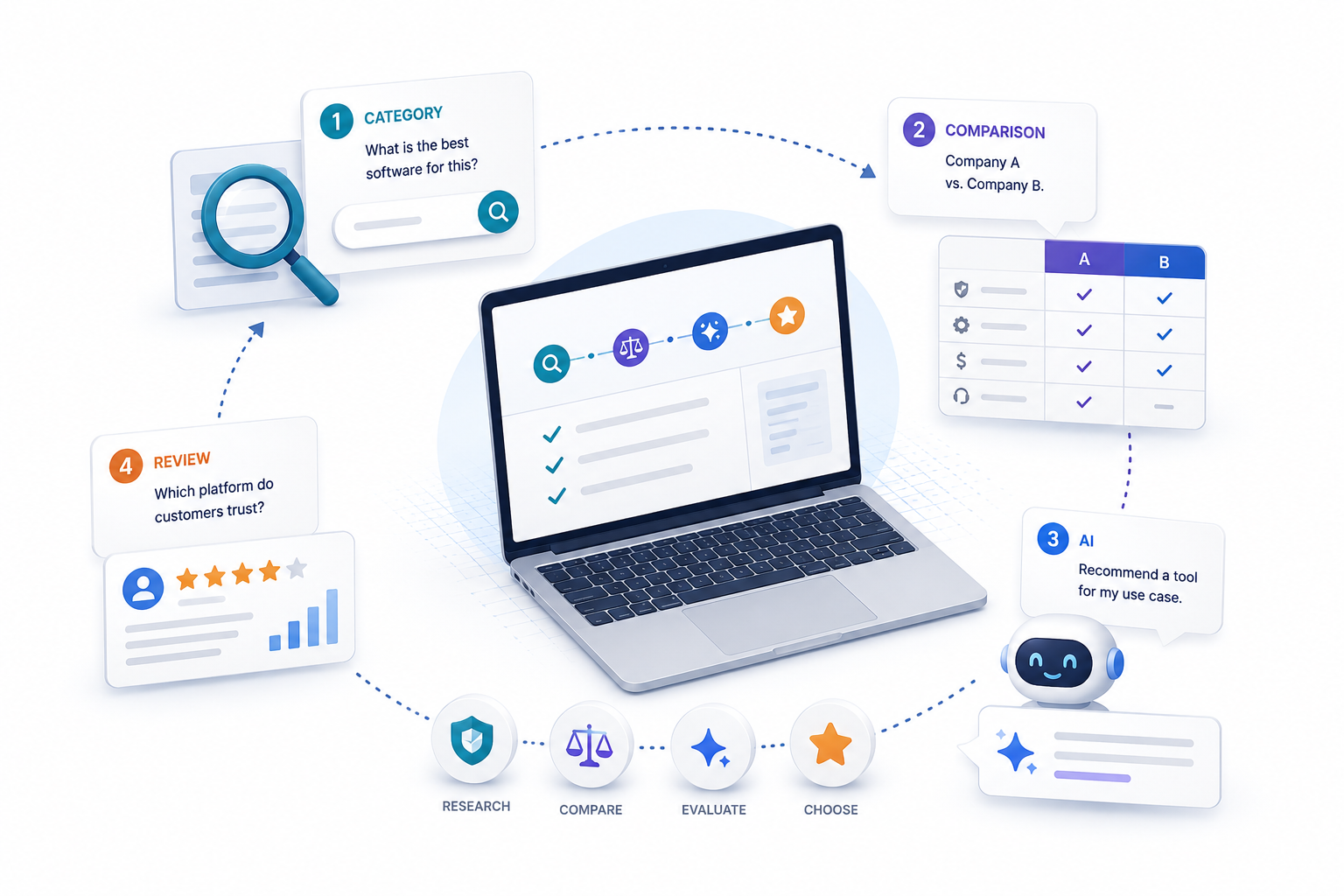
Queries like “best software for,” “alternatives to,” and “Company A vs. Company B” often influence buyers before sales ever speaks to them.
AI systems and buyers may rely on review sites, directories, listicles, forums, analyst content, and third-party comparisons to validate trust.
The product may be summarized too narrowly, outdated features may appear, or competitors may be recommended more often.
Traffic matters, but visibility should also account for AI mentions, comparison presence, review-platform strength, assisted demand, and qualified leads.
SaaS and national buyers increasingly rely on comparison pages, review platforms, AI-generated summaries, third-party recommendations, and category-level content before they take action.
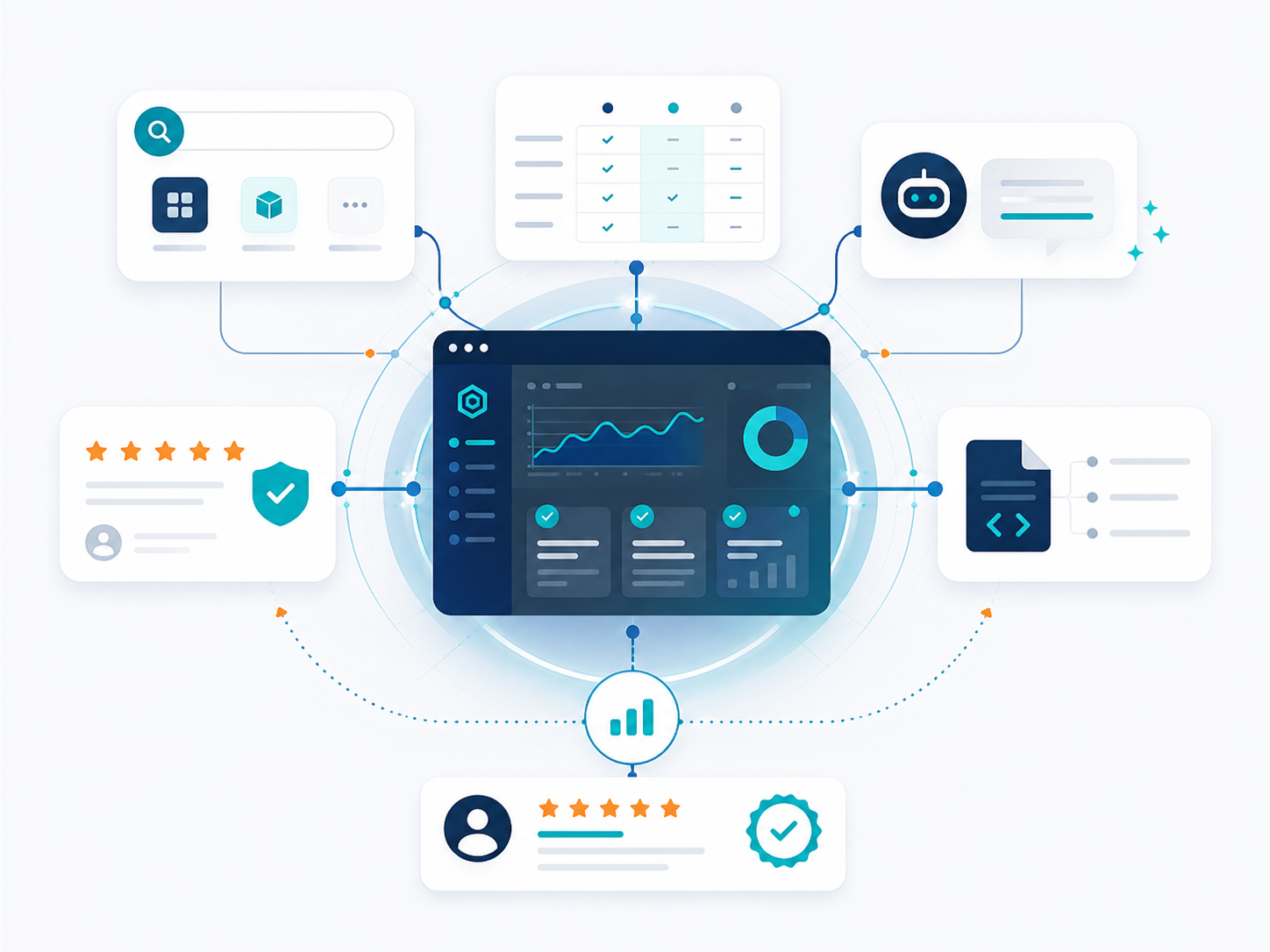
The process of improving how a non-local or category-driven business appears across Google, AI assistants, answer engines, comparison searches, review platforms, third-party sources, and owned conversion paths.
It combines SEO, product and category content, comparison strategy, earned coverage, structured data, continuous AI visibility measurement, source-of-truth content, and entity accuracy into one measurable system.
Make it easier for buyers and AI systems to understand:
Build or improve pages that define your category, explain your point of view, and help buyers understand where your solution fits.
Strengthen the pages buyers and AI systems use to understand capabilities, workflows, industries, integrations, and outcomes.
Create structured comparison assets for “best,” “alternatives,” “vs,” and decision-stage searches where buyers narrow the shortlist.
Evaluate how your brand appears across G2, Capterra, directories, listicles, forums, partner pages, and industry sources where relevant.
How your brand appears when buyers ask AI for recommendations, comparisons, and use-case advice — measured as your Share of Model and AI Visibility Score.
Clarify core product facts, features, use cases, industries, proof points, differentiators, FAQs, and limitations as one reliable reference.
Supporting structured data — Organization, SoftwareApplication, Product, Service, FAQPage, Review, BreadcrumbList, Article — weighted as foundation, not headline lever.
Connect visibility to demo requests, trials, quote requests, contact forms, product pages, and sales-ready next steps.
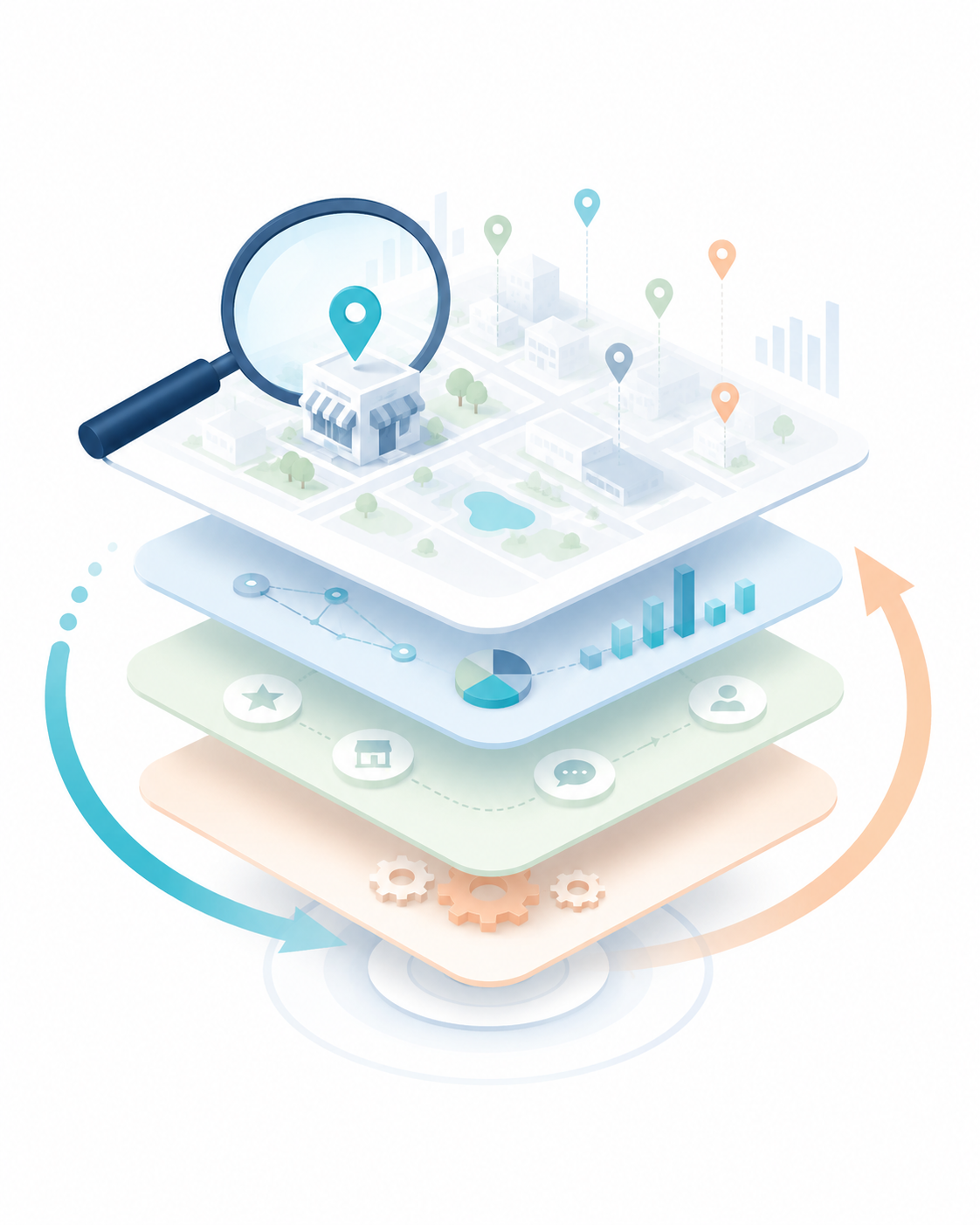
We map category, comparison, alternative, and use-case prompts; baseline your Share of Model and where AI cites competitors instead of you; then re-test every cycle — tracking Share of Model, citation source mix, source accuracy, and competitor movement.
The data decides the next move — capacity shifts toward whatever is moving Share of Model on priority bottom-funnel queries.
Before recommending more content or campaigns, we identify where your brand stands across the evaluation journey.
Get your free AI Entity Accuracy AuditThe percentage of AI answers that recommend you for priority queries — plus your AI Visibility Score (1-5). Target 30%+ on priority BOFU queries at maturity.
Which source types AI cites in your category — review platforms, publications, owned content, communities — and where competitors are over-cited.
How often AI describes your brand inaccurately, and the severity of those misrepresentations. Tracked from the AI Entity Accuracy Audit baseline.
Entity-layer signal strength across Wikidata, Crunchbase, LinkedIn, Knowledge Graph, and Organization/Product schema.
Visibility for alternative, versus, best-of, review, and decision-stage queries — supporting context for Share of Model.
Demo requests, trials, quote requests, contact forms, qualified inquiries, and sales-relevant actions tied to AI-influenced demand.
Category Visibility, Content Performance, and traffic-style metrics remain in the dashboard as supporting context — Share of Model and qualified leads are the outcomes.
Software companies that need visibility for use cases, comparisons, alternatives, integrations, features, and AI recommendations.
Companies with complex buyers, long evaluation cycles, and decision-stage searches across multiple stakeholders.
Brands that need category authority, product education, comparison visibility, and third-party validation.
Businesses that serve a broad market without depending primarily on one local area.
Companies where buyers research online, compare options, and convert through forms, subscriptions, demos, or consultations.
An early-stage SaaS company, a growth-stage B2B platform, and an established national brand do not need the same operating depth. The National / SaaS track scales based on category competition, product complexity, content gaps, review platform presence, comparison visibility, AI visibility issues, and reporting needs.
Tier is set by how much we measure — prompt universe size, platforms, competitor coverage, and cadence — not a deliverable count.
See National / SaaS pricing optionsNational / SaaS Search Systems Engineering improves how a non-local or category-driven business appears across Google, AI assistants, comparison searches, review platforms, third-party sources, and owned conversion paths.
It includes SaaS SEO foundations done well — that’s most of it. What’s different is the measurement layer: we track your Share of Model across AI assistants like ChatGPT, Gemini, and Perplexity, analyze which sources they cite, and run entity-accuracy audits. We don’t treat AEO as a separate discipline.
Important pages often include category pages, product pages, feature pages, use-case pages, industry pages, comparison pages, alternative pages, FAQs, case studies, and source-of-truth content.
Where relevant, yes. Review platforms and third-party sources can influence both buyers and AI-generated recommendations, especially in SaaS and B2B categories.
Yes. We test category, comparison, alternative, use-case, and recommendation-style prompts to understand how AI systems describe and position the brand — and we re-test every cycle as continuous measurement.
No. AI answers are probabilistic and change over time. The goal is to improve the signals that make your brand easier to discover, understand, cite, trust, and choose.
This track is best for SaaS companies, B2B platforms, e-commerce brands, online services, national firms, and category-driven businesses competing beyond local discovery.
The audit includes category visibility review, page review, comparison gap review, competitor visibility snapshot, AI recommendation testing, third-party source review, AI Entity Accuracy findings, and a priority action plan.